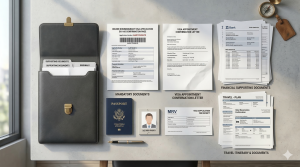
The core U.S. tourist visa requirements are legal eligibility standards, not a universal checklist of bank statements, property deeds and invitation letters. A B-1, B-2 or combined B-1/B-2 applicant must establish a permitted temporary purpose, demonstrate the ability and intent to comply with visitor status, satisfy the consular officer that the trip will end as planned and avoid any statutory ground that prevents visa issuance.
Last reviewed: July 30, 2026.
According to the U.S. Department of State, a refusal under Immigration and Nationality Act Section 214(b) can occur when the applicant does not establish eligibility for the requested category and/or does not overcome the presumption of immigrant intent. The officer considers the application individually, including the person’s circumstances, travel plans, financial resources and ties outside the United States.
No single document guarantees approval. There is no official minimum bank balance, property-ownership requirement or invitation-letter requirement for an ordinary B-1/B-2 application.
- Requirement 1: The Trip Must Fit the B-1 or B-2 Classification
- Requirement 2: The Purpose Must Be Specific, Credible and Temporary
- Requirement 3: The Applicant Must Overcome Section 214(b)
- Requirement 4: The Applicant Must Be Able to Pay for the Trip
- Requirement 5: The Applicant Must Intend to Follow the Authorized Stay
- Requirement 6: No Applicable Ground of Inadmissibility
- Requirement 7: Apply at the Proper Post and Follow Current Restrictions
- How the Requirements Apply to Common Applicant Profiles
- What the B-1/B-2 Requirements Do Not Include
- Documents Support Eligibility but Do Not Replace It
- What Happens After a Section 214(b) Refusal?
- Related Tourist Visa Guides
Requirement 1: The Trip Must Fit the B-1 or B-2 Classification
The intended activity must be temporary and legally permitted for a visitor. The fact that an activity lasts only a few days does not automatically make it permissible under B status.
Activities Generally Associated with B-1
- Attending business meetings, professional conferences or conventions
- Negotiating or signing contracts
- Consulting with U.S. business associates
- Settling an estate
- Participating in certain independent research or professional activity that does not constitute U.S. employment
- Completing another narrowly authorized business function conducted principally on behalf of a foreign employer or enterprise
B-1 is not a general work visa. Whether a proposed activity is permissible depends on what the applicant will actually do, who benefits from the work, where the principal place of business is located and how compensation is structured.
Activities Generally Associated with B-2
- Tourism, vacation and sightseeing
- Visiting family or friends
- Medical consultation or treatment
- Participation in unpaid amateur social or sporting events
- A short recreational course that does not provide academic credit
The Department of State states that employment, academic study, paid professional performances, work as foreign media, crewmember activity and permanent residence are not permitted on a visitor visa. Birth tourism — travel whose primary purpose is giving birth in the United States to obtain citizenship for the child — is also not permissible.
Requirement 2: The Purpose Must Be Specific, Credible and Temporary
The applicant should be able to explain why the trip is occurring, where it will take place, approximately how long it will last and how it fits the person’s normal life outside the United States. A credible purpose does not require a fully prepaid itinerary. It does require a coherent account that is consistent with the DS-160 and the applicant’s finances, employment, family circumstances and travel history.
Examples of sufficiently specific purposes may include:
- A two-week vacation visiting named destinations during approved leave from work
- A family visit connected with a graduation, wedding or other event
- A limited series of business meetings on behalf of a foreign employer
- Attendance at a named professional conference
- A medical consultation supported by a treatment plan and evidence of payment arrangements
Specificity should not become fabrication. Hotel reservations, event registrations and invitation details must reflect genuine plans. False documents or intentional misrepresentation can create a permanent ground of inadmissibility under INA Section 212(a)(6)(C)(i).
Requirement 3: The Applicant Must Overcome Section 214(b)
Section 214(b) provides that most nonimmigrant visa applicants are presumed to be immigrants until they establish entitlement to a nonimmigrant classification. For a B visa, the officer must be satisfied that the applicant will use the visa for a legitimate temporary visit and leave when the authorized stay ends.
“Strong ties” are not a points system. The Department of State lists a job, home and relationships with family and friends as examples, but the weight of each factor depends on the individual case.
Employment and Professional Ties
Stable employment, approved leave, ongoing projects, a professional practice or a functioning business can demonstrate reasons to return. A self-employed applicant may rely on business operations, employees, clients, contracts and tax records rather than a conventional employer letter.
Educational Ties
Current enrollment, a scheduled academic term, research responsibilities or required examinations may support temporary intent. The applicant must still show that the proposed U.S. activity is tourism or another B-2 purpose rather than degree study.
Family and Community Ties
A spouse, children, dependent relatives and established responsibilities outside the United States may be relevant. Family in the United States is not an automatic disqualification, but the officer may consider whether the proposed visit is consistent with temporary intent.
Property and Financial Ties
Property, investments and ongoing financial obligations can support the overall picture. They are not mandatory and do not compensate for an implausible travel purpose or inconsistent answers.
Prior Travel Compliance
Previous lawful travel and timely departures may help establish credibility. A prior overstay, unauthorized employment or pattern of lengthy visits can create the opposite inference.
The officer evaluates the whole case. A young, single or unemployed person is not legally barred from receiving a B visa. The person must present a credible temporary purpose and show circumstances that support departure, using evidence appropriate to that profile.
Requirement 4: The Applicant Must Be Able to Pay for the Trip
The applicant must demonstrate that the trip can be completed without unauthorized employment or reliance on prohibited public assistance. There is no published minimum bank balance. The financial resources should be proportionate to the destination, duration, accommodation and transportation plan.
An applicant may pay personally, share costs with companions or receive legitimate support from another person. When a host pays, evidence of that arrangement may help explain the budget. However, the Department of State’s visitor visa guidance makes clear that an invitation letter or Affidavit of Support is not required and does not replace the applicant’s own eligibility and ties abroad.
Financial credibility is stronger when the source of funds is understandable. A recent unexplained deposit may prompt questions, while ordinary income, savings history, pension payments, business revenue or a documented sponsor arrangement can provide context.
Requirement 5: The Applicant Must Intend to Follow the Authorized Stay
A B visa does not give permission to remain until the visa stamp expires. Customs and Border Protection decides the authorized stay at each admission and records it on Form I-94. The applicant must intend to leave by the I-94 date unless USCIS grants a timely extension or change of status.
Consular officers may consider prior U.S. travel patterns. Repeated stays of several months, short absences followed by immediate return or activities resembling residence can weaken a new application even when each prior departure occurred before the I-94 date.
An applicant should not use a visitor visa to enter with a preconceived plan to work, study for credit or immigrate through adjustment of status. A material misrepresentation about the intended purpose can have consequences far more serious than an ordinary 214(b) refusal.
Requirement 6: No Applicable Ground of Inadmissibility
Meeting the visitor requirements does not overcome every ground of inadmissibility. The Department of State’s ineligibility and waiver guidance lists statutory provisions involving criminal conduct, controlled substances, fraud or misrepresentation, unlawful presence, prior removals, health-related grounds, security concerns and other issues.
Prior Unlawful Presence
A person who accrued more than 180 days but less than one year of unlawful presence during a single stay and then departed may trigger a three-year bar. One year or more can trigger a ten-year bar. The calculation can be complex and should not be based only on the visa expiration date.
Fraud or Material Misrepresentation
Willfully misrepresenting a material fact to obtain a visa or admission can create a permanent ineligibility. This includes false employment records, fabricated financial documents, concealed relatives, incorrect marital status or a false description of the intended activity.
Criminal History
An arrest does not always equal ineligibility, and a conviction does not always produce the same result. The exact statute, conduct, disposition, sentence and exceptions matter. Applicants should disclose what the DS-160 asks and obtain legal advice when the history may trigger a ground under Section 212(a).
Prior Removal or Deportation
A prior removal order or expedited removal can create a period of inadmissibility and may require permission to reapply. Attempting to solve the issue by omitting it from the DS-160 can create an additional misrepresentation problem.
Some nonimmigrant applicants may be eligible for a discretionary waiver under INA Section 212(d)(3). The availability and strategy depend on the specific ground and facts. A generic tourist visa checklist cannot resolve this analysis.
Requirement 7: Apply at the Proper Post and Follow Current Restrictions
In July 2026, the Department of State instructed nonimmigrant applicants to schedule interviews in the country of nationality or residence. Applicants using residence must be able to demonstrate it, and nationals of countries without routine operations may need to apply at a designated post.
Nationality-based visa suspensions, visa bonds, regional processing hubs and enhanced screening policies can also affect whether a B visa may be issued or where the application must be processed. These policies change more quickly than the basic visitor visa law. Applicants should check the current Department of State Visa News page and the assigned embassy website before paying the fee.
How the Requirements Apply to Common Applicant Profiles
Employed Applicants
The officer may consider job stability, approved leave, income, length of service and whether the proposed trip fits the person’s work circumstances. No law requires five years with one employer or a particular salary.
Self-Employed Applicants
A functioning business can be a strong tie when the applicant can explain operations, clients, revenue and responsibilities. Business registration alone is not decisive if the enterprise appears inactive.
Students
Enrollment, academic progress and a scheduled return to classes can support temporary intent. The applicant must have a realistic funding plan and cannot use B-2 for degree study.
Retirees
Retirement is not a disqualification. Pension income, property, family responsibilities, prior travel compliance and a trip proportionate to the person’s finances can establish a credible case.
Applicants Visiting U.S. Family
Having close relatives in the United States is not an automatic refusal. The officer evaluates the relationship, host’s status, proposed visit, applicant’s own ties and any history suggesting an intention to remain.
Medical Visitors
A medical-treatment applicant should be prepared to explain the diagnosis, U.S. provider, expected duration, estimated cost and how treatment and living expenses will be paid. The purpose must be treatment rather than birth tourism.
What the B-1/B-2 Requirements Do Not Include
- No universal minimum bank balance
- No mandatory property ownership
- No required invitation letter for an ordinary visitor visa
- No guaranteed approval based on a U.S. sponsor
- No fixed number of months that money must remain in an account
- No automatic refusal because the applicant is young, single, retired or unemployed
- No right to employment, degree study or permanent residence
- No guarantee of admission after visa issuance
Documents Support Eligibility but Do Not Replace It
The baseline and supporting documents are covered in the dedicated B-1/B-2 document checklist. This requirements page should not reproduce that complete checklist.
The practical rule is simple: bring records that support the real facts of the case and that can be understood quickly. Documents should be authentic, current and consistent with Form DS-160. A letter or statement cannot cure an ineligible purpose or a false answer.
What Happens After a Section 214(b) Refusal?
A 214(b) refusal is not permanent, but it closes that application and has no formal appeal. The person may apply again by submitting a new DS-160, paying another fee and scheduling a new interview.
Reapplying immediately with the same facts usually produces the same concern. A new application is more useful when the applicant can correct a factual error, present a clearer qualifying purpose or show a genuine material change in employment, finances, family responsibilities, travel circumstances or another relevant factor.
A refusal under 221(g), fraud, unlawful presence or another ground requires a different response. Applicants should read the legal section on the refusal notice rather than treating every denial as a 214(b) case.
Related Tourist Visa Guides
- B-1/B-2 Tourist and Business Visa Complete Guide
- B-1/B-2 Visa Application Process
- Documents Required for a U.S. Tourist Visa
- B-1/B-2 Interview Questions and Answers
- U.S. Visa Denied: 214(b), 221(g) and Next Steps
- ESTA and the Visa Waiver Program
A strong visitor visa application is not built around a single “magic” document. It is built around a qualifying temporary purpose, truthful and consistent facts, resources proportionate to the trip and credible circumstances showing that the visit will end as planned.